











DUI checkpoints are a regular part of law enforcement efforts throughout Northern Virginia, especially during weekends, holidays, and periods of increased travel. While sobriety checkpoints are generally legal in Virginia, many drivers are unsure of their rights when approaching one. A brief stop can quickly escalate into a DUI investigation if officers believe impairment is present, making it critical to understand what police can ask, what you are required to provide, and where your constitutional protections apply.
If you have already been stopped or arrested at a DUI checkpoint, speaking with an experienced DUI defense attorney as soon as possible can help you pursue the best outcome available. Early legal guidance allows an attorney to review whether the checkpoint itself was lawful and whether your rights were fully respected. The attorneys at Crowley Peritz Law focus exclusively on criminal and serious traffic defense and can help you understand your options before your case moves forward.
The Legality of DUI Checkpoints in Virginia
Sobriety checkpoints in Virginia are lawful when conducted in compliance with constitutional standards designed to balance public safety with individual rights. The United States Supreme Court has upheld the use of checkpoints when they are minimally intrusive and carried out under neutral guidelines. Virginia courts apply these same principles, carefully evaluating whether law enforcement followed proper procedures in planning and operating the checkpoint.
A checkpoint’s legality depends not on its stated purpose but on how it is executed. When police fail to follow required safeguards, a checkpoint stop may violate Fourth Amendment protections against unreasonable searches and seizures. These issues often form the foundation of legal challenges in DUI cases arising from checkpoint stops.
How Lawful DUI Checkpoints Are Conducted
Virginia law requires several procedural safeguards to limit officer discretion and protect motorists. One of the most important is advance notice. Law enforcement agencies must publicize checkpoints ahead of time through local media outlets, department websites, or public announcements. While officers may not always disclose the exact location, advance notice is intended to prevent surprise enforcement and promote transparency.
Officers must also follow a neutral stopping pattern, such as stopping every third or fourth vehicle, rather than selecting drivers at random. Additionally, checkpoint locations, timing, and procedures must be approved by supervisory personnel. Officers in the field are not permitted to create checkpoints spontaneously or deviate from approved plans.
What to Expect When You Approach a DUI Checkpoint
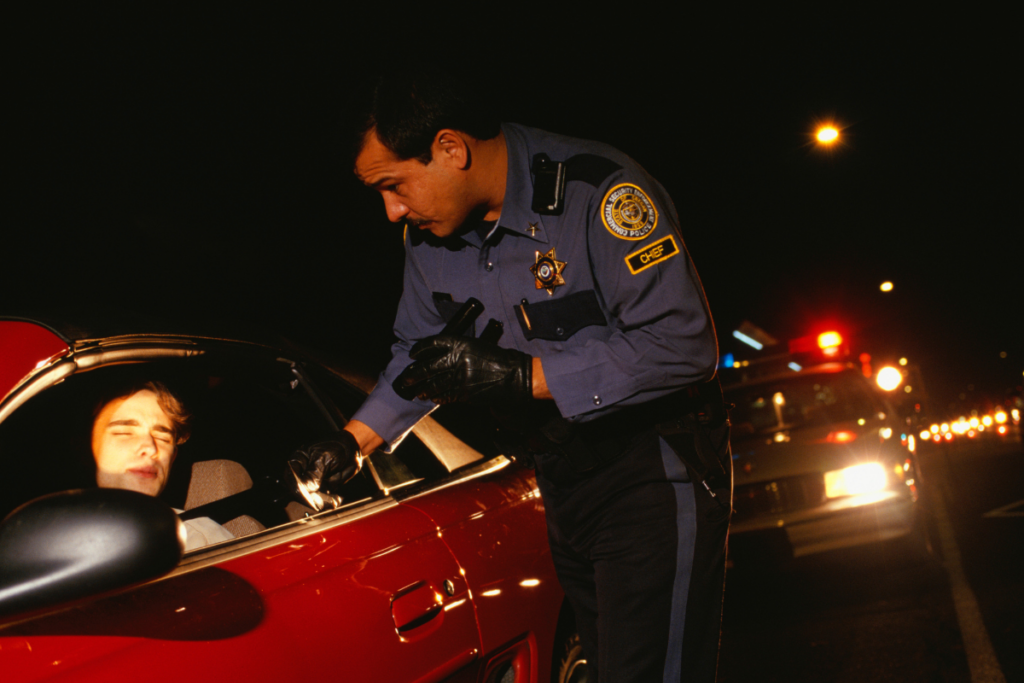
DUI checkpoints are typically marked by signs, traffic cones, flashing lights, and a visible law enforcement presence. When a driver reaches the checkpoint, the initial stop is meant to be brief and limited in scope.
Officers usually request a driver’s license, vehicle registration, and proof of insurance. While reviewing these documents, they may observe the driver for signs of impairment, including the smell of alcohol, slurred speech, or bloodshot eyes. Based on these observations, the officer may either allow the driver to proceed or direct them to a secondary screening area.
Officers may also ask general questions, such as whether the driver has consumed alcohol. While these questions are common, drivers are not required to answer them. Beyond providing identification and required documents, motorists have the right to remain silent and avoid making statements that could later be used against them.
Your Rights During a DUI Checkpoint Stop
Drivers retain important constitutional protections during a sobriety checkpoint stop. The Fourth Amendment limits how long officers may detain a driver and prohibits unreasonable searches and seizures. Police may not prolong the stop without reasonable suspicion of impairment or criminal activity.
Drivers must provide identifying documents, but are not obligated to answer personal or investigative questions. You can also refuse to consent to a search of your vehicle, unless officers have probable cause to proceed without consent.
Field sobriety tests are voluntary in Virginia and may be politely declined. Preliminary roadside breath tests are also optional and do not carry automatic penalties if refused. However, once a driver is placed under arrest, Virginia’s implied consent law applies, and refusal to submit to post-arrest chemical testing can result in license suspension and additional legal consequences.
Avoiding a DUI Checkpoint and Potential Risks
Virginia drivers are permitted to avoid a DUI checkpoint by turning onto another road before reaching it, provided the maneuver is lawful and safe. Choosing an alternate route is not, by itself, grounds for a traffic stop.
Problems arise when drivers attempt to avoid a checkpoint by committing a traffic violation, such as making an illegal U-turn or speeding. In those situations, law enforcement may lawfully stop the vehicle based on the observed violation, regardless of the checkpoint.
What Happens If You Are Detained or Arrested
If an officer develops reasonable suspicion during the checkpoint stop, the driver may be directed to a secondary area for further investigation. This can lead to additional questioning, field sobriety testing, or a breath test. If an arrest occurs, the driver may face serious consequences, including criminal charges, license suspension, fines, and potential jail time.
At this stage, reviewing the legality of the checkpoint and the officer’s conduct becomes critically important. A qualified DUI defense attorney can assess whether constitutional violations occurred and whether evidence should be challenged or suppressed.
Why Legal Representation Matters After a DUI Checkpoint Arrest
DUI cases involving sobriety checkpoints often hinge on constitutional and procedural issues. A conviction can affect a driver’s license, employment, insurance rates, and future interactions with the court system. Legal representation ensures that your rights are protected and that any errors by law enforcement are identified early.
An experienced DUI defense attorney can examine checkpoint planning documents, officer reports, and testing procedures to determine whether the stop complied with Virginia law. Effective advocacy can significantly influence the outcome of a case.
Why Choose Crowley Peritz Law
Crowley Peritz Law focuses exclusively on criminal and serious traffic defense throughout Northern Virginia. With more than 31 years of combined experience, the firm has extensive knowledge of Virginia DUI law and the constitutional requirements governing sobriety checkpoints.
By limiting their caseload, the attorneys at Crowley Peritz Law provide personalized attention and thorough preparation for every client. Clients have direct access to their attorneys and receive clear, practical guidance throughout the legal process.
Contact Crowley Peritz Law Today
DUI checkpoints in Virginia are legal, but only when conducted within strict constitutional limits. If you were stopped, detained, or arrested at a sobriety checkpoint, waiting to seek legal advice can put your rights at risk. Early intervention allows an attorney to preserve evidence, challenge unlawful procedures, and protect your future.
To speak with an experienced DUI defense attorney, contact Crowley Peritz Law through the firm’s online contact form or call 703-123-4567 to schedule a confidential consultation. The firm proudly serves clients throughout Fairfax County and Northern Virginia and is committed to defending your rights at every stage of the process.